WELCOME
The culture of peace consists of a series of values, attitudes and behaviors that reject violence and prevent conflicts by trying to attack their causes in order to solve problems through dialogue and negotiation between people, groups and nations, taking into account the very important point of human rights, as well as respecting them and taking them into account in these treaties. (This was defined by UN resolution, being approved by the General Assembly on October 6, 1999 at the Fifty-third session, Act 53/243).
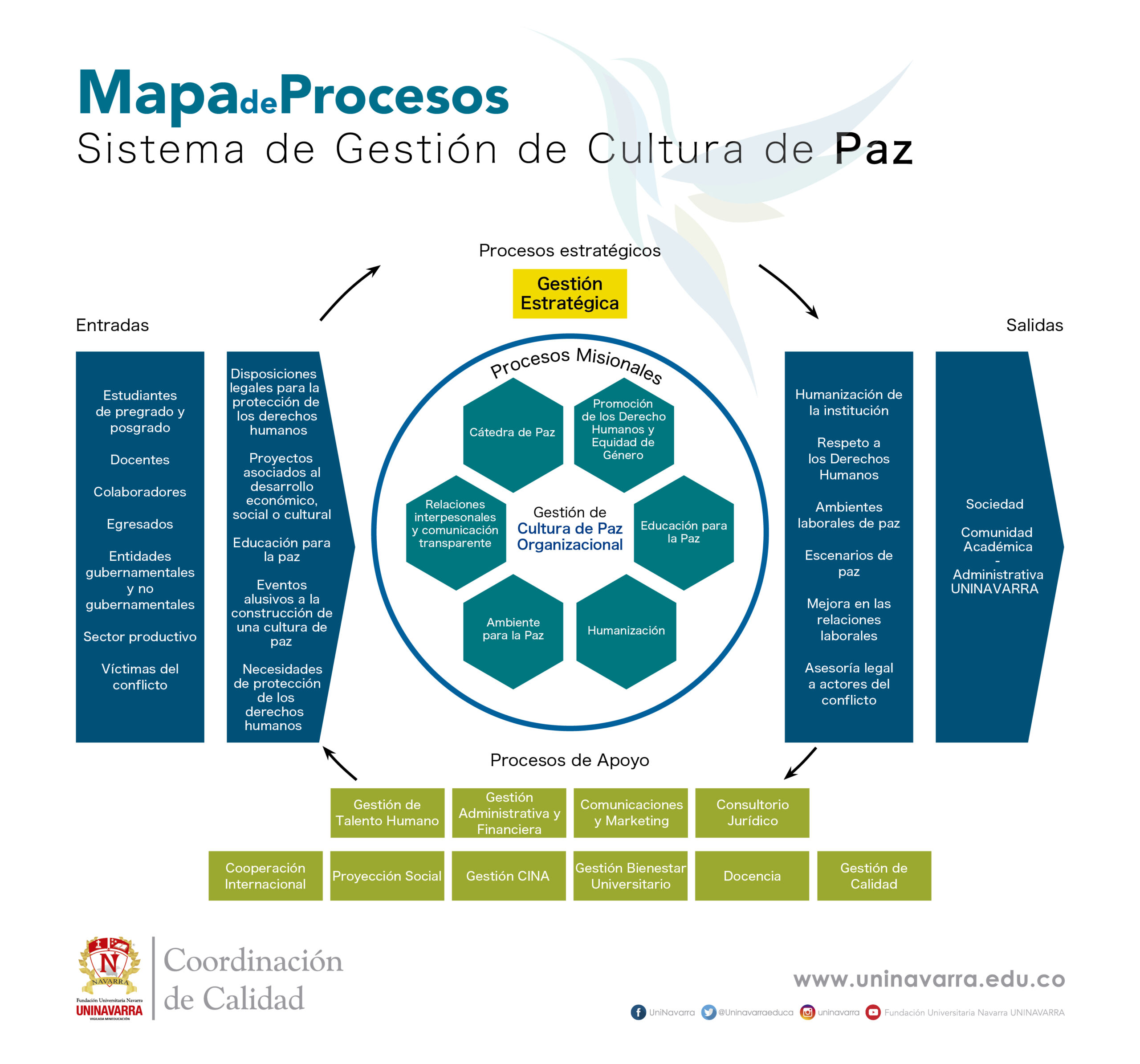
The Organizational Culture of Peace Management System promotes in the academic community the acceptance and commitment to build peace from everyday life, modifying ways of proceeding and collective imaginaries established in the collective conscience.
ORGANIZATIONAL CULTURE OF PEACE POLICY
The Navarra University Foundation - UNINAVARRA is committed to the achievement and sustainability of a culture of peace, through different strategies of training, research, social projection, extension and international cooperation in different institutional and community scenarios, of peace in favor of all the strata and actors of the institution and the region.
Under the parameters of the regulations and compliance with legal requirements, in order to provide the internal and external community.
In accordance with the parameters and objectives of a Culture of Peace. Through a continuous and solidary work that guarantees the active participation of people as teachers and conciliators for peace as a contribution to social transformation.

ORGANIZATIONAL CULTURE OF PEACE OBJECTIVES
-
- Promote and develop training processes as TEACHERS and TEACHERS OF PEACE to members of the academic and administrative community of UNINAVARRA, community leaders and the community in general.
- Promote and maintain the generation and use of peaceful scenarios and environments inside and outside the institution.
- Ensure the regulatory consistency of the institution.
- Continuously improve the suitability, adequacy or effectiveness of the RBMS
- Actively participate in institutional and inter-institutional scenarios (networks) designed to create environments in a culture of peace.